Journal · Production · 07/04/2026
How Terrazzo Is Made: From Raw Materials to a Finished Surface
Five stages — materials, casting, curing, grinding and sealing — and why each one decides the strength, smoothness and beauty of a terrazzo piece.
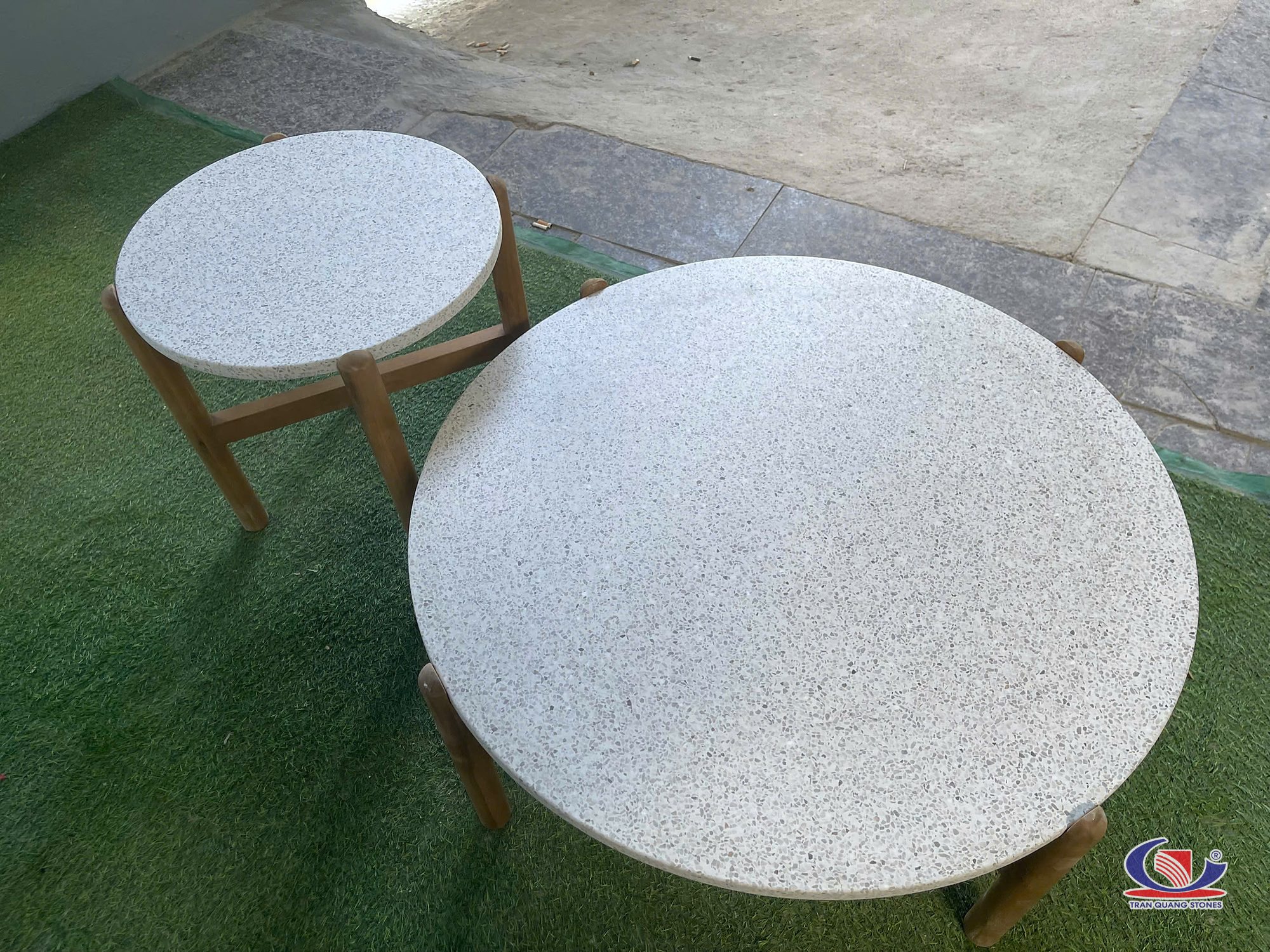
Terrazzo is one of the few materials that is both highly durable and highly decorative, used widely indoors and out. It looks simple, but creating a beautiful, solid terrazzo surface takes several technical stages — and each one directly affects the strength, smoothness and appearance of the finished piece.
1. Preparing the materials
The first step is preparing the aggregate and the binder.
- Aggregate: usually marble, granite, quartz or recycled glass
- Binder: cement (most common in Vietnam) or epoxy
The mix ratio is critical. Too much cement and the piece is prone to shrinkage and cracking; too much stone and the surface will not bond evenly. Getting the balance right takes experience.
2. Mixing and casting
The materials are mixed thoroughly into a terrazzo blend, which is then either poured directly onto a surface (floors, counters) or cast into moulds (tables, seating, decorative objects).
At this stage the team must:
- Spread the mix evenly
- Remove air bubbles
- Keep the thickness consistent
If this is rushed, the piece can end up pitted or weak inside.
3. Curing
After casting, terrazzo needs time to harden and reach full strength. For cement terrazzo this usually takes several days, during which it is important to:
- Keep humidity stable
- Avoid harsh sun and rapid drying
Improper curing is one of the main causes of cracking and reduced durability.
4. Grinding and polishing
Once fully cured, the surface is ground to reveal the stone chips inside. Grinding is done in stages:
- Coarse grinding: levels the surface
- Medium grinding: corrects small defects
- Fine grinding / polishing: creates smoothness and sheen
This is the stage that defines the beauty of terrazzo — the more care taken, the smoother and brighter the finish.
5. Sealing and finishing
The final step is applying a sealer, which:
- Prevents water from penetrating
- Reduces staining from coffee, oil and dust
- Improves durability for outdoor use
After sealing, the terrazzo piece is complete and ready for use.
Conclusion
Making terrazzo is a combination of technique, experience and patience. From choosing materials and mixing in the right proportions to grinding and treating the surface, every step matters. That process is why terrazzo is not only beautiful but long-lasting — and why it is increasingly popular for tables, seating, planters and outdoor spaces. [See our terrazzo collection](/collection/terrazzo/).